

Let’s face it. The world is up against some pretty big challenges — climate change, biodiversity loss, and some social flaws and inequalities that run deep. People and planet are under pressure. But here’s the good news: building businesses that focus on creating real impact is becoming one of the most powerful ways to tackle these issues. Not only are these businesses (often referred to as impact-driven ventures) proving they can make a difference, but they’re also catching the attention of global investors, helping them grow even more.
The tricky part? While the impact space is growing fast, it’s still a bit of a puzzle. A lot of ventures are out there trying to solve big problems on their own, which means we’ve got lots of great efforts but in all different directions. This scattered approach might help, but it won’t bring about the deep, lasting changes we need. To really move the needle on these global challenges, we’ve got to get more coordinated and strategic in how we build and grow impact-driven ventures: a systemic approach to venture building.
It’s a lot to swallow, right? Let’s break it down for you by addressing the following:
- Why traditional venture building isn’t enough anymore
- What is a systemic approach and what does it look like?
- Venture-building tips for systemic change
- A short case study in systemic venture building
Why traditional venture building isn’t enough anymore
Traditional ways of building ventures tend to zoom in on fixing specific problems within one sector or industry at a time. And while these efforts can work on a smaller scale, they often miss the bigger picture, leaving the deeper, systemic issues untouched.
Unlike Enviu and other big-picture thinkers, traditional ventures tend to work in their own bubbles, missing out on the magic that happens when different sectors team up. This siloed approach can limit how far solutions can go, especially when global challenges are so interconnected and need to be tackled on multiple fronts at once.
So if not traditional venture building, then what? Cue the systemic approach.
What is a systemic approach and what does it look like?
Systemic venture building is all about intentionally creating multiple companies that work together to tackle big, complex issues. The key is figuring out the root cause of the problem first—once that’s clear, you can pinpoint exactly where to make changes that will really move the needle. So, any systemic approach to venture building has to kick off with a solid deep dive into the issue at hand, getting to the bottom of the most pressing problems and understanding how they play out in their local contexts.
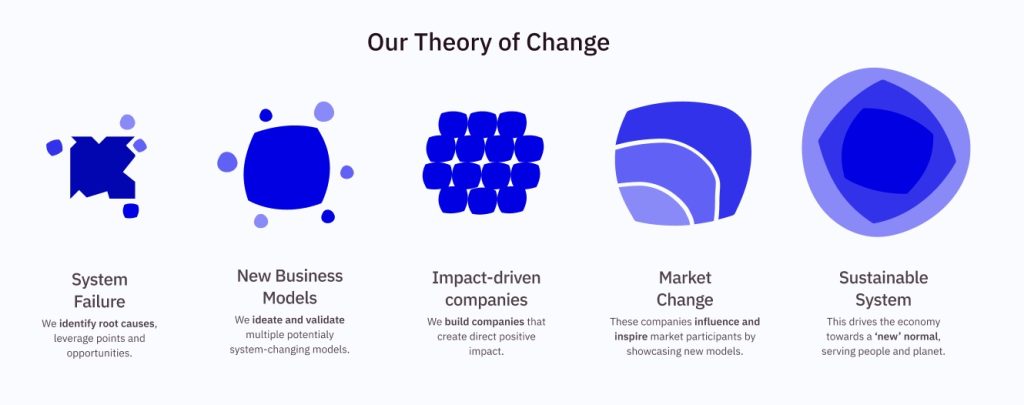
Once you’ve got a solid understanding of the problem, you can create a vision with a clear Theory of Change and business solutions that have the power to drive real, lasting change. This approach helps build a focused, strategic pipeline of businesses that tackle a specific system-wide issue, rather than just a random collection of ventures each making a one-off impact.
Venture-building tips for systemic change
To bring about real, system-wide change and build a strategic lineup of ventures, there are a few different venture-building strategies that can (and should!) be put to work.
Depending on what’s needed, here are three go-to strategies:
- GROW promising local business solutions. This means finding existing local businesses that have the potential to fix system flaws. The key here is teaming up with local entrepreneurs to help scale their businesses and impact to a game-changing level.
- REPLICATE business solutions from other countries. Sometimes the best solutions are already out there! By looking at proven business models from other countries, we can bring those ideas over and adapt them to the focus country.
- IDEATE new groundbreaking business models. If there’s still a gap, it’s time to get creative and dream up brand-new business models that fit perfectly into the bigger plan.
In all three strategies, partnering with a local entrepreneur or on-the-ground teams is crucial in ensuring the solution is tailored to its local context
A case study in systemic venture building: Enviu Agrifood
Enviu has spent 20 years crafting impact-driven ventures, and we’ve got some pretty cool cases to share. One of our favorites? The FoodFlow program.
Enviu Agrifood is a great example of how we put the concept of systemic venture building into practice.

So, how does creating a strategic pipeline of ventures actually work?
In Kenya, we were faced with a big challenge: too much food going to waste and not enough reaching those in need. So, our team rolled up their sleeves and got to work, digging into the food system to find out what was going wrong. It didn’t take long to pinpoint the main culprit: post-harvest food loss.
During our Issue Analysis, we uncovered some key issues:
- Farmers who struggled to connect with markets and had little bargaining power.
- Many intermediaries munching away at profit margins.
- Seasonal overflows of produce that often went to waste.
- Limited opportunities for farmers to turn surplus produce into something valuable.
This investigation gave us the insights we needed to understand the big picture and the players involved. Armed with this knowledge, we set an ambitious goal: to create a zero-loss food supply chain.
So far, our efforts have led to the creation of SokoFresh, Shambani Pro, and the scaling of Taimba.
But we didn’t stop there. Rather than throwing out one-off solutions, FoodFlow is all about crafting a strategic network of initiatives that work together like a well-choreographed dance. The goal? To create a model that’s so effective, it can be replicated across different crops and regions, ultimately driving a circular food value chain in Kenya.
Our Enviu Agrifood program isn’t just about isolated fixes—it’s about making a big splash with business solutions that hit the right spots along the value chain. The result? Maximum impact and real system change.
Let’s join forces to drive fundamental change
We’re up against some of the biggest challenges humanity has ever faced, and the clock is ticking. That’s why we need to lean into deliberate, systemic venture building—it’s a powerful, strategic way to drive real, lasting change and tackle these issues head-on.
But here’s the thing: no one can do it alone. By teaming up and building strong partnerships, we can create a ripple effect of impact—and we can make it happen faster.
